
China Dominated CES, Detroit Stayed Home
What A Takeover Looks Like

If you want to understand what happened at CES 2026 in Las Vegas last week, a good place to start is Dreame.
This 8-year-old Chinese maker of robot vacuums drew massive crowds jostling to lay eyes on its 1,876-horsepower supercar.
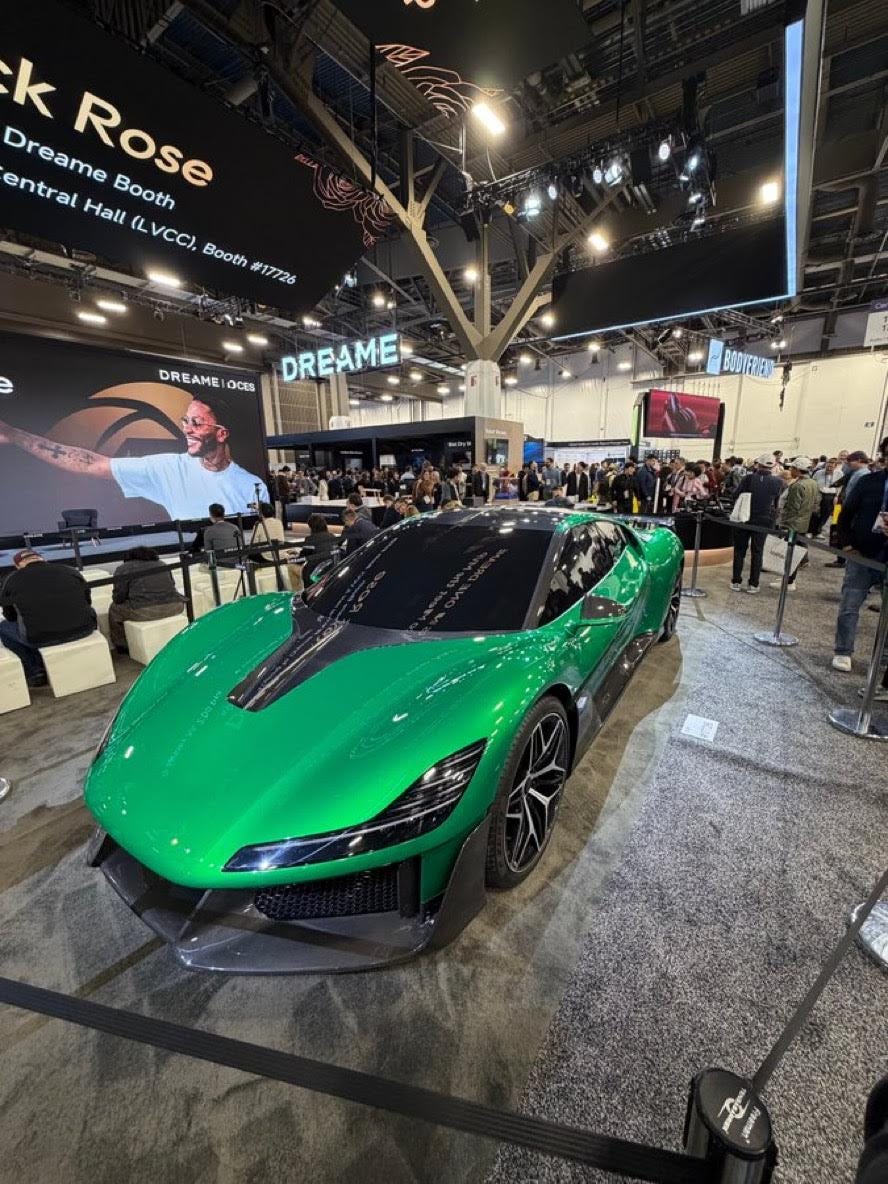
Dreame has never manufactured an automobile. Yet there it was at CES 2026, presenting the Kosmera Nebula 1, a supercar promising a 0-60 mph time under two seconds.
Vanishing Western Automakers
CES has always been global, with attendees showing up from over 150 different countries. But 2026 felt like the Chinese Electronics Show. Nine hundred Chinese firms exhibited at this year’s show. Not ninety. Nine hundred.
I got behind the wheel of products from seven Chinese car brands: Dreame, Geely, Great Wall, Lynk & Co, Wey, Xiaomi, and Zeekr.
The competition? Hyundai focused on robotics and industrial automation, but showed no cars. BMW offered test drives of its Neue Klasse via the iX3. Sony Honda Mobility showed the Afeela (again).
That was it. I did not see exhibits for GM, Ford, Stellantis, Rivian, Mercedes-Benz, Volkswagen, Renault, Toyota, Honda, Nissan, or Subaru. Beyond Chinese brands, the automaker bench was nearly empty.
The Chinese lineup: product, pricing, and swagger. Here are the highlights:
Most Impressive: Xiaomi YU7
The smartphone giant continues to impress. The YU7’ s interior is a masterclass in clean, quality design, anchored by a stunning coast-to-coast heads-up display. Starting at under $40,000 in China with a European launch planned for this year, it represents the kind of tech-forward thinking that once defined American and Japanese automakers.
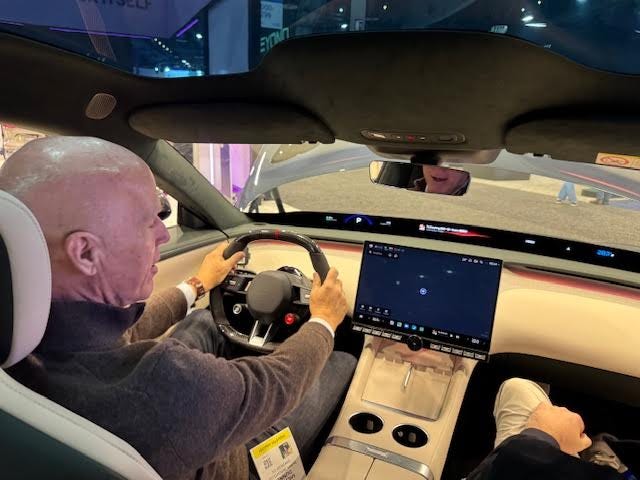
Some might argue about whether Xiaomi is a real car company. The market is already voting. Xiaomi (means “Rice Millet” in Chinese) went from zero to 500,000 sales in under 20 months. Twenty months.
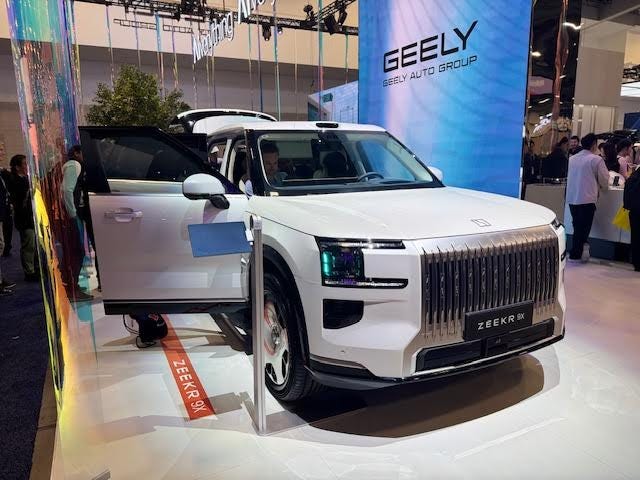
Most Audacious: Zeekr 9X
Starting at $65,000 this SUV takes direct aim at Range Rover. The exterior is unabashedly gaudy and ostentatious—a deliberate statement for Chinese buyers. Inside, a gorgeous cabin with unmistakable Volvo DNA ( not surprising, since Zeekr is mostly designed and developed in Sweden).
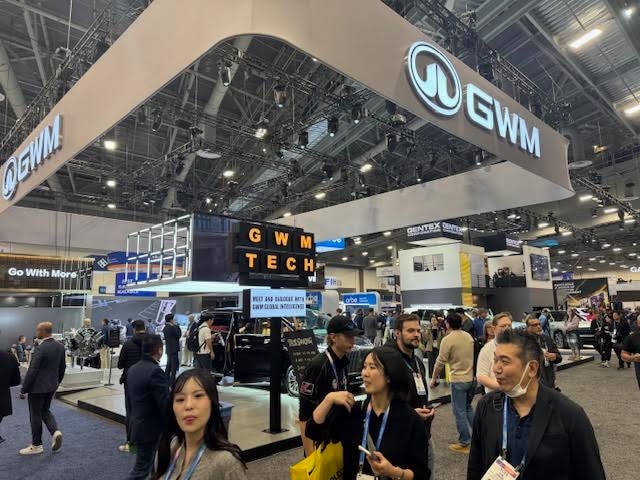
Most Unexpected: Great Wall Motors
The “Jeep of China” is not typically associated with cutting-edge technology. Great Wall Motor (GMW) used CES to show both its mainstream brand and upscale Wey line and signal that it intends to compete across segments and in advanced technologies.
Biggest Statement: Geely Auto Group
Geely occupied the largest automotive space at CES, consolidating Geely, Zeekr, and Lynk & Co under one giant stand. If you want the cleanest “China vs. the West” contrast, go straight to pricing. The Geely M9 SUV, starting at just $28,000 in China, underscored the irresistible sticker prices Chinese manufacturers bring to global markets: a big, family-sized, three-row-friendly proposition at a price that makes Western OEM cost structures look like a lame Dad joke.
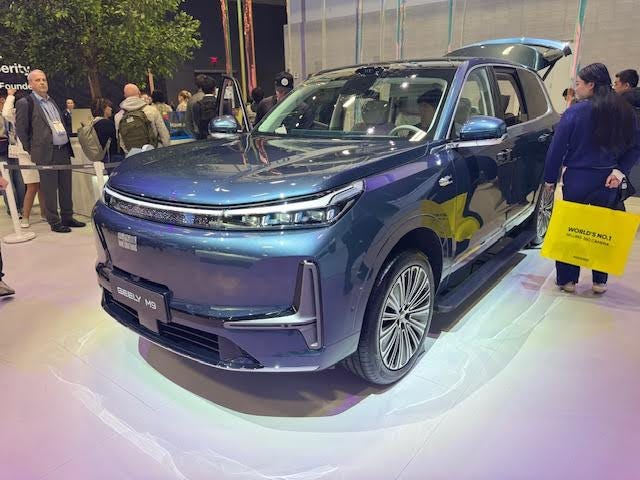
You want EVs? Chinese have that. PHEVs? Chinese have that, too. Good old-fashioned gasoline-powered engines? Of course!
I also had an opportunity to drive Zeekr and Lynk & Co products at the Las Vegas Motor Speedway, 20 minutes north of the city center.
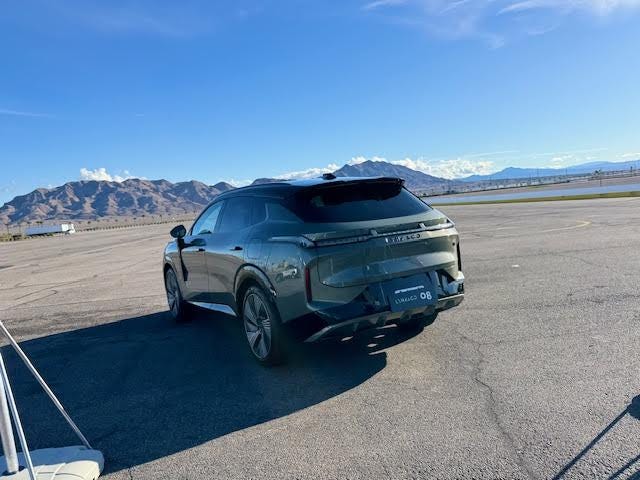
One professional race car driver who rode is the passenger seat summed up his own impressions: “Chinese cars are the best in software and the digital cockpit. Driving performance standards are not yet world-class, but do younger drivers really care about handling tight corners?”
Perception Becomes Reality
The absence of brands like Ford, GM, Stellantis, Toyota, Honda, Mercedes-Benz, and Volkswagen from the world’s premier technology showcase sends an unmistakable message: legacy automakers either have nothing new to show or they don’t get the direction of the industry. Maybe both.
When China dominates the mobility conversation at CES, the story sinks in: China is where the software is. China is where the AI is. China is getting bolder.
China will export close to eight million vehicles this year. It seems inevitable that we’ll see Chinese cars on American roads well before 2030.
Geely says a decision will be taken “within two to three” years. The owner of Volvo, Lotus and Polestar brands won’t come alone. “Where’s the best place for us to set up manufacturing in America?” an executive at another Chinese automaker asked me.
CES is where technology leaders signal what’s coming in the next decade, not how to protect the last one. With Detroit absent, the audience draws its own conclusions.
In 2026, China threw down the gauntlet.
Detroit did not even show up to contest territory in its own backyard.
Great Update thx.
I visited the Xiaomi factory last November. Incredibly impressive. The place is 90+% automated. They produce something like 400K vehicles a year there with only 400-500 people.
The factory floor was practically devoid of people, I saw 30-50 people in the control center and 20 people with tablets on the factory floor itself. The rest is all robots.
Main use of human labour seems to be the finer detailed finishing for interior etc.