
The Car World Is Going Electric, Without America.
Special Excerpt From The Free Press, By Michael Dunne. Reprinted With Permission

When it comes to electric vehicles, Detroit was in denial for too long. Then it panicked and launched a flurry of flawed initiatives and hurried Hail Marys. That knee-jerk reaction is now costing the auto companies—and America—a fortune.
In December 2025, Ford announced a $19.5 billion write-down on its electric vehicle investments—one of the largest charges in corporate history. Ford killed the F-150 Lightning, the electric truck its executives not too long ago compared to the Model T. Days later, General Motors disclosed a $6 billion charge of its own. Just last week, Stellantis, the owner of the Jeep, Chrysler, and Dodge brands, announced its own colossal hit, taking a $26.5 billion write-down on its EV investments. In total, that is 50 billion dollars gone.
How did we get here? The easy answer—that American consumers simply never wanted electric vehicles—is a lazy one. The harder truth is that Detroit’s retreat from EVs is the result of a spectacular cascade of failures: by automakers who never took the transition seriously, dealers who actively undermined it, and a political environment that turned the simple act of buying an electric car into a toxic political statement.
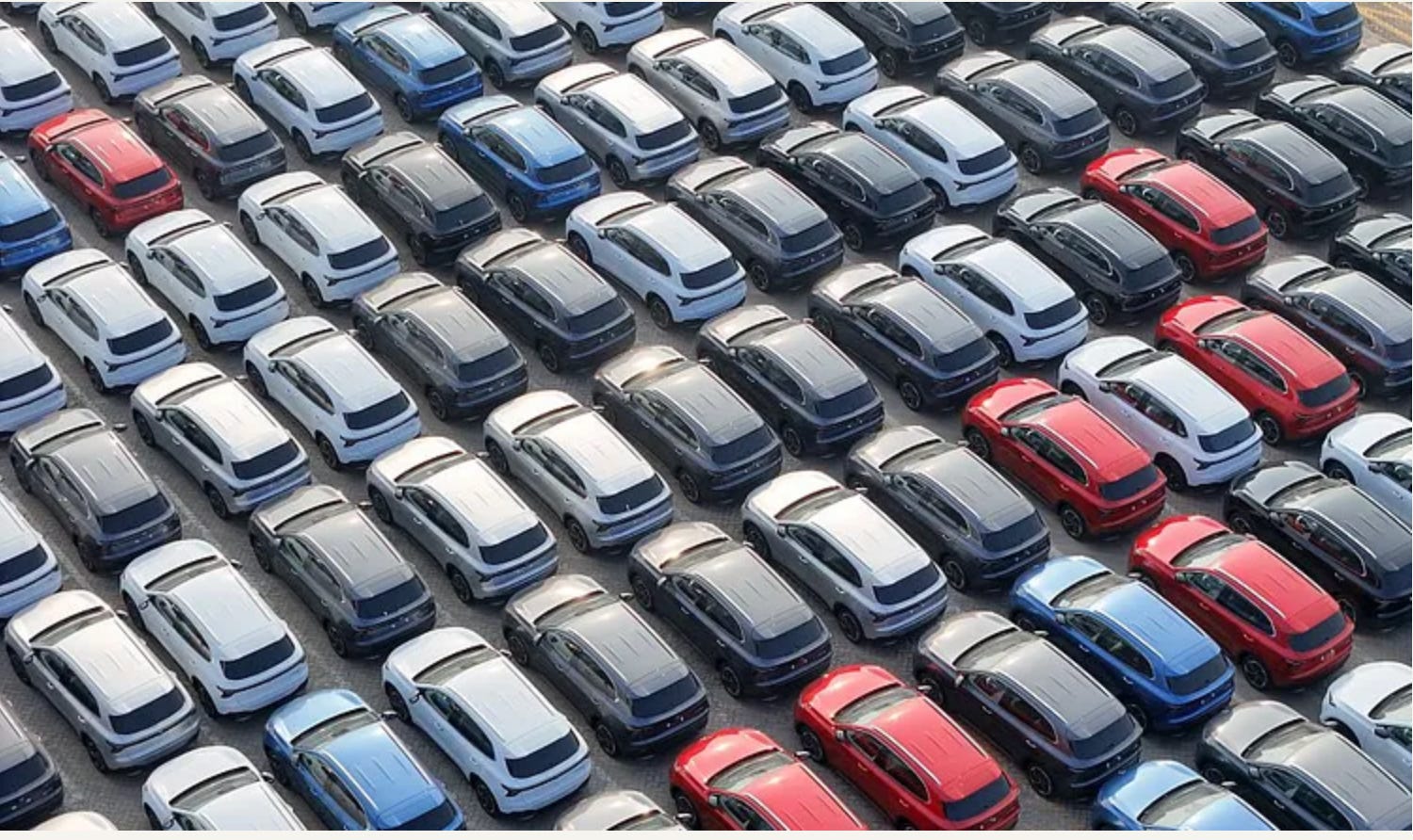
This matters because America is now falling behind in what may be the most consequential industrial transformation since the automobile itself. Batteries that power electric vehicles are the same ones America needs to power next-generation products like drones, humanoid robots, and AI data centers. These technologies are crucial to our national security.
Batteries are only part of the story. EVs also rely on high-efficiency motors built with rare-earth permanent magnets, the same materials that are essential to communications systems, consumer electronics, missile guidance, jet engines, and satellites. Today, China controls roughly 70 percent of rare earth mining and over 90 percent of processing capacity. Without a thriving domestic EV industry creating sustained demand, America lacks the economic incentive to build the processing facilities, magnet factories, and supply chains needed to reduce that dependence.
America needs to be good at manufacturing EVs because we need to be good at building the batteries and high-efficiency motors that power them. In the future, these technologies will power everything that matters.
A New Species of Car
When Tesla’s sales started to take off, legacy automakers initially dismissed it as a niche phenomenon. Silicon Valley making cars? Please. By the time the automakers recognized the threat, Detroit was years behind—and the gap proved far wider than anyone there wanted to admit.
That’s when they hit the panic button. Detroit’s first mistake was to dramatically underestimate the time required to produce quality electric vehicles. An EV isn’t a gas car with the engine swapped out. The software alone—battery-management systems, charging protocols, over-the-air updates—requires capabilities that Ford and GM had never developed. They scrambled to hire outside talent, building massive new software teams numbering in the thousands. But throwing engineers at the problem didn’t speed execution. It created chaos. Without the vertical integration that Tesla had built from scratch, coordinating with dozens of suppliers became a nightmare of misaligned incentives and incompatible systems.
And the cars themselves? The Tesla Model Y was a new species of car, with its software updates and self-driving features, that felt like nothing that came before. Soon, the Model Y became one of the best-selling cars in the world.
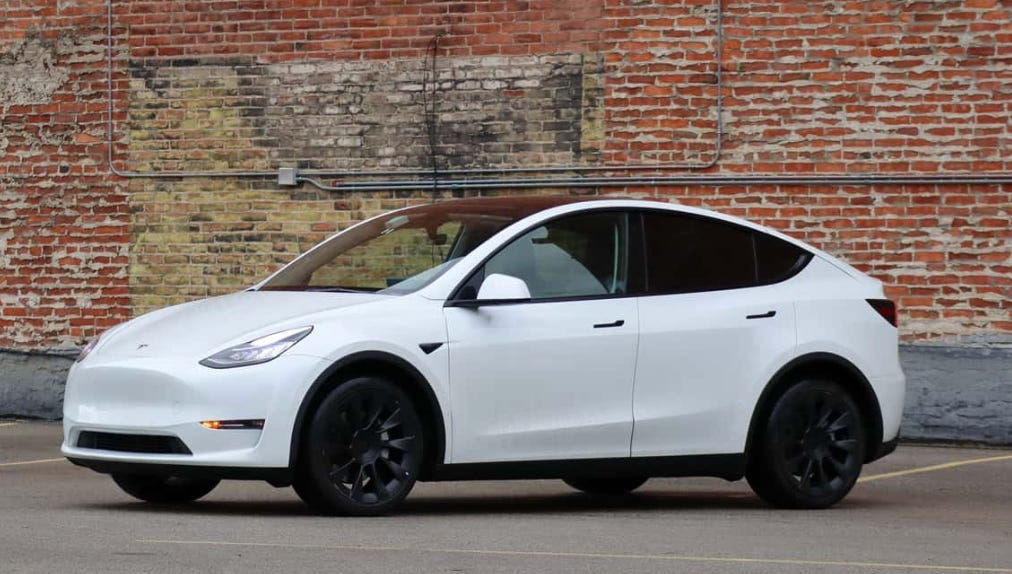
Ford’s Mustang Mach-E and GM’s various offerings were, for the most part, electric versions of gas cars—but more expensive. They offered the EV drivetrain without the EV sizzle and software finesse.
Sales of Detroit’s hastily developed EVs never took off. Without full-scale manufacturing, costs remained stubbornly high. Ford lost more than $20,000 on every F-150 Lightning. The more EVs that Ford and GM sold, the more money they lost.
Dealer Disincentives
There is also an awkward truth Detroit executives will only whisper: Many dealers actively sabotaged EV sales.
Car dealerships make most of their money on parts and service. EVs need far less maintenance—no oil changes, no transmission repairs, no exhaust systems. For a dealer, every EV sold represents years of lost service income. Is it any surprise that when customers walked in curious about electric vehicles, salespeople amplified every concern? Range anxiety got talked up. Cold-weather performance became a deal-breaker. Charging difficulties were presented as insurmountable obstacles.
Tesla, by selling directly to consumers, never faced this problem. When you walked into a Tesla store, you were talking to someone whose job was to sell you a Tesla. When you walked into a Ford dealership asking about the Lightning, you might have been talking to someone whose livelihood depended on selling you a gasoline version of the F-150 instead.
As Charlie Munger liked to say: “Show me the incentive and I’ll show you the outcome.”
Charging Nightmares
For anyone not driving a Tesla, America’s public charging infrastructure has been a frustrating mess. A 2025 study found that nearly one-third of charging attempts fail. The gap between “available” and “functional” has been a constant source of range anxiety and buyer reluctance.
The problems were manifold. Different networks used different payment systems. Chargers from different manufacturers couldn’t be updated to work with newer vehicles. And until recently, non-Tesla EVs used a different plug entirely, meaning Tesla’s excellent Supercharger network—the one charging infrastructure that actually worked reliably—was off-limits to most of the market.
This wasn’t an issue in Europe or China, where standardized connectors meant every charger worked with every car. American EVs were balkanized from the start. The industry has now largely adopted Tesla’s North American Charging Standard (NACS) connector, but the damage has been done. Years of “Will this charger work with my car?” uncertainty left countless potential buyers on the sidelines.
Our Sputnik 2 Moment
The conventional wisdom will be that “the market spoke” and Americans rejected EVs. This is too convenient. What American consumers soured on was a poorly executed transition: overpriced vehicles that weren’t compelling enough to justify the premium, sold by dealers with no incentive to sell them, dependent on a charging network that didn’t work, and marketed inadequately in an environment that had become politically toxic.
China’s dominance in EVs and batteries is our Sputnik 2 moment. That nation’s massive vertical integration—making its own batteries, semiconductors, and software—gives it a cost advantage that Detroit, today, cannot match. Ford CEO Jim Farley recognizes the danger, calling Chinese automakers “an existential threat.” He is not wrong.
Beyond Cars
The stakes extend far beyond the auto industry. The same rare earths that power EV motors also power the guidance systems in our missiles and the motors in our military drones. Every EV battery plant that does not get built in America is a strategic vulnerability.
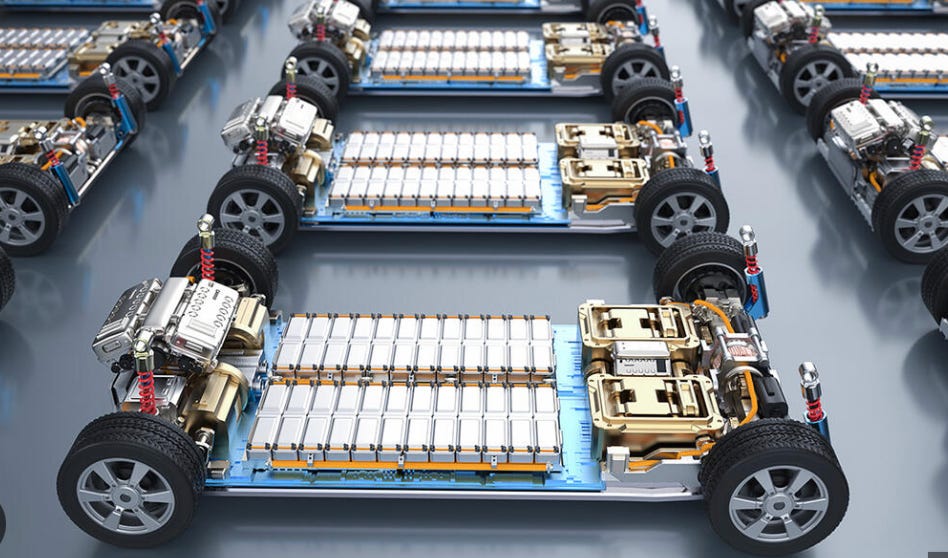
Chinese EVs are now pouring into markets in Europe, Latin America, and Southeast Asia. Canada just announced a policy to open the door to Chinese EV imports, too. Chinese cars are not yet on American roads, blocked by tariffs. But the industrial capacity is being built elsewhere, and if the U.S. opens the market, American automakers may find themselves hopelessly outclassed.
Sadly, there is a risk of an American capitulation. Stellantis is relying on Leapmotor, a Chinese EV maker, to produce its electric vehicles for Europe and other markets. Ford is pursuing a partnership with China’s Geely in Europe. Last week, reports that Ford may form a joint venture with BYD or another Chinese company in the U.S.
The EV transition has not failed. It is winning—just not here and not by Detroit. There are no shortcuts. Building a world-class EV and battery industry requires that America commit to 10 years of uninterrupted, intense effort. We should also pool resources and investments with our allies—Japan, Korea, and Europe—to achieve the innovations, manufacturing scale, and lower costs that can match China.
The question now is whether America will watch from the sidelines as the rest of the world moves on—or finally get serious about joining the race.
• • •
What do you think about future of electric vehicles and battery supply chains in America? Are we hopelessly behind or is there still a path to a triumphant comeback?
Read the complete opinion piece here at The Free Press
Thanks, Michael. I did not appreciate the dealership role in undermining EVs but it seems logical. Can you suggest any studies showing this impact?
I anxiously await how successful the separation of batteries from cars (swapping) impacts adoption with the lower entry price for EVs and consumer willingness to accept the battery as an independent purchase decision. Not just for autos, but for maritime and trucking consumers. The Nio model will transform this as much as improved battery chemistry.
And while we may reach a technological equivalence with China in the arena, industrial scale is another issue altogether. Tough to innovate and compete when you are delivering 500,000 units and they are delivering 5M.
Your insights are so valuable. Thanks!
Excellent article. I just disagree about the massive advantage of the Chinese carmakers being vertical integration. There is some of that, but I think what is driving the innovation and driving down costs is the modular nature of the Chinese carmaking supply chain. Ford's River Rouge plant showed how vertical integration stifles innovation. That's not what's happening in China.